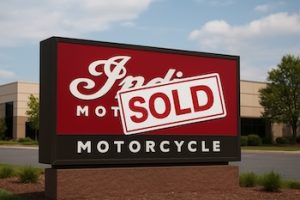
I sat down with Indian Motorcycle CEO Mike Kennedy for an exclusive interview on the Law Abiding Biker Podcast, and he did not hold back. From his 26 years at Harley-Davidson to the dominant start to the King of the Baggers season, the launch of the all-new ARO performance brand, and his aggressive plans for dealer expansion and a trike — Kennedy laid it all out. If you ride an American V-twin or are considering one, this is a conversation you need to hear. Be sure to watch the full video interview below in this article.
At Law Abiding Biker, we're passionate about supporting riders with honest content and quality products. Visit the Law Abiding Biker Store for motorcycle parts, accessories, and gear — with free shipping on orders over $100 and no sales tax outside Washington State.
Who Is Mike Kennedy?
Mike Kennedy isn't your typical corporate CEO. He's a lifelong rider who has been on two wheels since he was twelve years old, starting on a Yamaha single-cylinder street bike that he and his dad turned into a makeshift enduro and rode through fields. He got his motorcycle license as soon as he could and has been riding ever since.
His professional resume reads like a roadmap of the entire motorcycle industry. Kennedy spent 26 years at Harley-Davidson, working his way through product development, marketing, parts and accessories, and eventually serving as VP of Harley-Davidson Americas. After leaving Harley, he went on to lead Vance & Hines, held a leadership role at BRP (Bombardier Recreational Products), and served as CEO of RumbleOn — one of the largest powersports dealer networks in the country. He's seen the motorcycle business from the OEM side, the aftermarket side, and the retail and dealership side. Very few people in this industry can say that.

SUPPORT US AND SHOP IN THE OFFICIAL LAW ABIDING BIKER STORE
When private equity firm Carolwood LP acquired Indian Motorcycle from Polaris in early 2026, Kennedy was their pick to lead the brand into its next chapter. He told me his wife's reaction summed it up well — she told him he'd been working his whole career for exactly this opportunity.
A Rider-Led Company Built From the Ground Up
One of the first things Kennedy made clear is that Indian Motorcycle is now a fundamentally different company than it was under Polaris. As part of a $10 billion-plus corporation, Indian represented roughly seven percent of the business. Decisions about motorcycles were made within that broader corporate context. Now, as a standalone company with around 900 employees, the entire organization is singularly focused on one thing: motorcycles.
Kennedy described it as a complete shift in energy, thought process, and connection to the rider. The company makes decisions differently now. They move faster. They're closer to their dealers and closer to the people who actually ride the bikes.
He's putting that philosophy into practice personally. Kennedy has been riding his own Indian motorcycles to dealerships around the country, stopping in to meet dealer owners and their teams face to face. He told us about riding a Roadmaster PowerPlus from Dallas to Daytona Beach, visiting dealerships along the way and learning from every stop. For Kennedy, being on the product and participating in the sport isn't a PR stunt — it's how he believes a motorcycle company CEO should operate.

CHECK OUT OUR HUNDREDS OF FREE HELPFUL VIDEOS ON OUR YOUTUBE CHANNEL AND SUBSCRIBE!
When we asked what he's personally riding, Kennedy said the Challenger is his favorite in the lineup. He loves the bagger setup, the PowerPlus engine platform, and the technology package including rear radar and blind spot indicators. He also owns a 101 Scout and keeps a Pursuit in the garage for rides with his wife. The two of them are planning to ride the Pursuit from Texas to the Rendezvous event in Durango in June.
What 26 Years at Harley-Davidson Taught Him
Kennedy was candid and reflective about his time at Harley-Davidson. He credits the people he worked with there — leaders like Ron Hutchinson, Jerry Wilkey, and CEOs Keith Wandell and Rich Cheerlink — for teaching him the fundamentals of the motorcycle business. From product development and marketing to the critical importance of a strong dealer network, those years gave him a deep foundation.
 LISTEN TO THE LAW ABIDING BIKER PODCAST!
He shared that Ron Hutchinson brought him into the parts and accessories and CVO group, sponsored him to get his MBA at Kellogg, and eventually handed him the Harley racing program in the late 1990s when it was struggling. That racing assignment is what first connected Kennedy with Vance & Hines — a relationship that would prove pivotal decades later. Jerry Wilkey taught him early on about the value of an engaged dealer network, a lesson that clearly still drives Kennedy's approach today.
Interestingly, Kennedy revealed that he didn't leave Harley-Davidson voluntarily. He was exited from the company, and he believes it was because he was too focused on supporting the dealer network at a time when the culture at Harley was moving in a different direction on that front. His father was a small business owner, which gave Kennedy a lifelong appreciation for what dealers go through — the liability, the risk, and the around-the-clock commitment it takes to run a dealership.
Kennedy Calls Out Harley-Davidson
I asked Kennedy directly what he thinks Harley-Davidson is getting wrong, and he didn't dodge the question. While acknowledging he hasn't been at Harley for some time and can only speak from the outside looking in, he was straightforward in his assessment.
Kennedy said that for a long period of time, Harley-Davidson was the greatest motorcycle company on the planet. But over the last five to eight years, he finds what's been coming out of Milwaukee troubling. He feels the company has become disconnected from the core rider. He pointed to a previous CEO who came from the shoe industry and, in Kennedy's words, clearly had disdain for the core rider and took the company in a bad direction that hurt the dealer network significantly.
He also expressed surprise at the most recent CEO appointment, noting that while he has nothing personally negative to say about the individual, the background simply doesn't align with what the company needs. To Kennedy, that appointment signals a board that is disconnected from the business, the core rider, and the real issues Harley needs to confront.
Kennedy then drew a sharp contrast. When you have a privately owned motorcycle company with 900 employees and the ownership hires a 35-year motorcycle industry veteran who actually rides — that's a completely different game than what's happening in Milwaukee. Indian under his leadership is building what he calls a rider-centric culture from the top down, and he's unapologetic about it.
Dominating King of the Baggers With Vance & Hines
The story behind the Indian Motorcycle and Vance & Hines factory racing partnership is one of the most compelling in the sport right now. Kennedy has a nearly 30-year relationship with Vance & Hines co-founder Terry Vance — a relationship that started back in the late 1990s when Kennedy brought Vance & Hines into the Harley-Davidson racing program. That original partnership lasted roughly 25 years, surviving multiple CMOs and CEOs at Harley.
Kennedy told us that during the due diligence process before the Carolwood acquisition closed, he asked to speak with Terry Vance directly about racing. He remembers the conversation vividly. It was late September, right after the final race of the previous season. Kennedy laid out his vision and told Terry he wanted to go racing in King of the Baggers and he wanted to be competitive at Daytona. Terry's response was that Kennedy was asking a lot. Kennedy's reply was simple — he knew exactly who he was asking.

BECOME A PATRON MEMBER AND GET BENEFITS!
From that late September conversation to the first race weekend at Daytona in early March, the Vance & Hines team worked around the clock. Kennedy told us that Steve Pulk, the primary engineer driving the racing program, was at the shop until three in the morning on multiple nights during that window. The result was nothing short of extraordinary. The Indian Challenger hit 186 miles per hour on the Daytona straightaway — 14 mph faster than rider Hayden Gillim had gone the previous year on a Harley-Davidson. Indian posted back-to-back one-two finishes at Daytona.
Then at Road Atlanta, the team took it a step further. Gillim swept the weekend — winning the Challenge race, Race 1, and Race 2 — and Indian claimed an all-podium finish with all three riders on the box. Kennedy admitted he figured they might achieve a one-two-three finish by midseason, not the second race weekend.
When asked whether racing success translates to showroom sales, Kennedy was emphatic. He pointed out that the 186 mph race bike at Daytona shares the same chassis and the same PowerPlus engine architecture that a customer can buy at their local dealership. The bodywork dimensions are the same. That direct physical connection between the track and the showroom is real, and Kennedy said the Challenger product line has been outperforming the rest of the Indian lineup over the last 90 days — a trend he directly attributes in part to the racing program's visibility.
ARO: American Racing Operations — A New Performance Brand
One of the biggest announcements Kennedy discussed is the launch of ARO — American Racing Operations — Indian Motorcycle's new performance sub-brand launching May 27th around the Road America race weekend.
Kennedy described ARO as much bigger and broader than just a product launch. It's a performance sub-brand underneath Indian Motorcycle Company, comparable in concept to what Screaming Eagle is to Harley-Davidson or what AMG is to Mercedes. ARO will launch with exhaust products — slip-on mufflers, two-into-one systems, and potentially race replica exhaust setups for baggers — with more categories of performance parts and accessories expanding throughout the year.
But here's where it gets really interesting. Kennedy revealed that ARO will eventually grow to include entire motorcycles branded under the ARO name. He even mentioned that someday there may be services built around the ARO platform. The name itself pays direct heritage to Indian's 125-year racing history, tying the brand's legendary competition DNA directly to products that everyday riders can bolt onto their bikes.
Kennedy and his team are riding from Indian's Minneapolis headquarters to Elkhart Lake, Wisconsin for the Road America race weekend to launch the brand in person alongside dealers, riders, and the racing team. This is worth paying attention to as it develops throughout 2026 and beyond.
Embracing the Aftermarket as Partners
One of the most significant shifts Kennedy is making at Indian is his approach to the aftermarket industry. Rather than viewing aftermarket manufacturers as competitors to Indian's own accessories business, Kennedy is treating them as partners.
He was direct about the philosophy. If a rider buys a Challenger and then puts a Rinehart exhaust or Kraus bars on it, Indian isn't profiting from that sale. Some OEMs would respond by trying to lock out aftermarket companies and force customers toward their own branded parts. Kennedy said that's not his mindset. He wants to embrace the aftermarket, partner with those companies, and help facilitate their product development for Indian motorcycles.
His reasoning is simple — it's what riders want. And his job is to make sure riders and dealers can get the products they're asking for. Indian will still invest in its own OEM accessories and the ARO performance line, but Kennedy sees room for both to coexist and thrive.
For riders who have been hesitant about Indian because of limited aftermarket support, this is a significant statement directly from the CEO. If Kennedy follows through — and everything he's doing suggests he will — the aftermarket landscape for Indian motorcycles should look very different in the coming years.
If you're looking for quality motorcycle parts and accessories right now, check out the Law Abiding Biker Store. We carry products we've personally tested and believe in, with free shipping on orders over $100 and no sales tax outside Washington State.
Dealer Network: Expansion Done the Right Way
Kennedy addressed the dealer network question head-on. Indian currently has roughly 600 dealers worldwide, with over 230 in the United States. He noted that when Polaris first acquired the brand, there were only a handful of dealers globally, so the growth to 600 is genuinely impressive.
He acknowledged that there are pockets in North America where Indian needs more dealership representation. The company is actively talking to existing dealers about expanding and engaging with prospective dealers about bringing the line on. However, Kennedy was clear that he doesn't want to expand just to put a pin on a map. When Indian has an engaged dealer with a committed team, that dealership significantly outperforms its peers — not by a small margin, but by a substantial one. So the expansion will be deliberate and focused on quality.
Kennedy's dealer-first philosophy showed through when he told me about the Petersen Museum event in Los Angeles. He intentionally declined every media and podcast interview request before that event because he wanted Indian's dealers to hear the company's new direction directly from him first — not through a third party. Night two of that LA event was packed with dealership owners, personnel, and their families, and Kennedy described the energy in the room as unlike anything he'd experienced in his career.
He also shared a philosophy that stuck with me — if problems are at corporate, the solutions are in the field. Dealers are already dealing with the challenges and have likely already figured out answers. Kennedy's job is to listen, learn, and support them.
The Trike Is Coming
Kennedy confirmed that Indian Motorcycle is actively developing a trike and it's on a fast track. He acknowledged what riders already know — there's essentially one player making trikes today, and that market needs a competitor. Indian's riders want it. Indian's dealers want it. The brand is set up for it.
Under a normal product development timeline, Kennedy said a trike would take three to four years from the green light to shipping. He made it clear they're not following a normal timeline. Indian will have a partner involved in the development, and their engineering team already has deep expertise in rear independent suspension from their previous work on the off-road vehicle side at Polaris. Kennedy said the team had already been studying the trike segment with curiosity before he arrived — he simply poured gasoline on that small fire and made it a primary focus.
He wouldn't give a specific date, but told us it won't be three to four years and it won't be next Tuesday — and he's confident people will be impressed with both the timeline and the product. He's already ridden a prototype and said he's very impressed.
The Product Strategy: Focused and Unapologetic
Kennedy has declared Indian's product strategy clearly: cruisers, baggers, touring, and very soon trike. Period. No electric motorcycles — he said Indian's riders aren't interested and the technology isn't there. No low-cost overseas-manufactured bikes — the Scout starts at $9,999 and Kennedy considers that a great entry point into a premium brand. And no FTR revival — he considers that a distraction from where the real growth opportunity lies.
He pointed out that the upside for Indian in the cruiser, bagger, touring, and trike segments globally is enormous. Indian is already winning significantly in the middleweight cruiser segment and gaining ground in touring. The bagger segment is the largest in North America and Kennedy identified it as the primary focus area — which is exactly why King of the Baggers racing is so strategically important to the brand.
On the topic of attracting younger riders, Kennedy pushed back on the common narrative that the motorcycling demographic is aging out. He noted that younger riders in their 20s and 30s are often building families, buying homes, and managing competing financial priorities — but that doesn't mean they won't eventually come to motorcycles. He also pointed to the explosion of electric bicycles as a potential pipeline, theorizing that kids growing up on two wheels and experiencing that freedom may eventually graduate to street motorcycles.
He also highlighted the pre-owned market as a great entry point for Indian. Many riders he talks to prefer to start with a used Scout or Chief because they don't want to risk scratching a brand-new bike while they're still building confidence.
What Kennedy Would Say to Riders on the Fence
I closed by asking Kennedy what he'd say to a rider who's been thinking about Indian but hasn't pulled the trigger. His answer was simple and confident — go take one for a test ride, and if you don't buy it, call him personally because he'd be puzzled.
Kennedy shared that when he rode a Roadmaster PowerPlus from Dallas to Florida, he was genuinely blown away by the powertrain, engineering, technology, and comfort. He joked that he tells his buddies — many of whom still ride Harley-Davidsons — that if they don't want a new bike in their garage, they shouldn't take an Indian for a test ride.
Beyond the product itself, Kennedy wants riders to see the culture Indian is building. A rider-focused company run by riders, led by a 35-year industry veteran who knows the OEM side, the aftermarket side, and the dealer side. In his words, they're having a lot of fun and they're only getting started.
Watch the Full Interview
This article covers the highlights, but there's so much more in the full conversation. Watch the complete interview below to hear Mike Kennedy in his own words.
Join the Free Email Club!
If you appreciate this free information make sure to join the thousands of law abiding bikers that have already joined the free Email Club! You will be notified of new useful motorcycle content and techniques as we put them out. Join the Community now!